

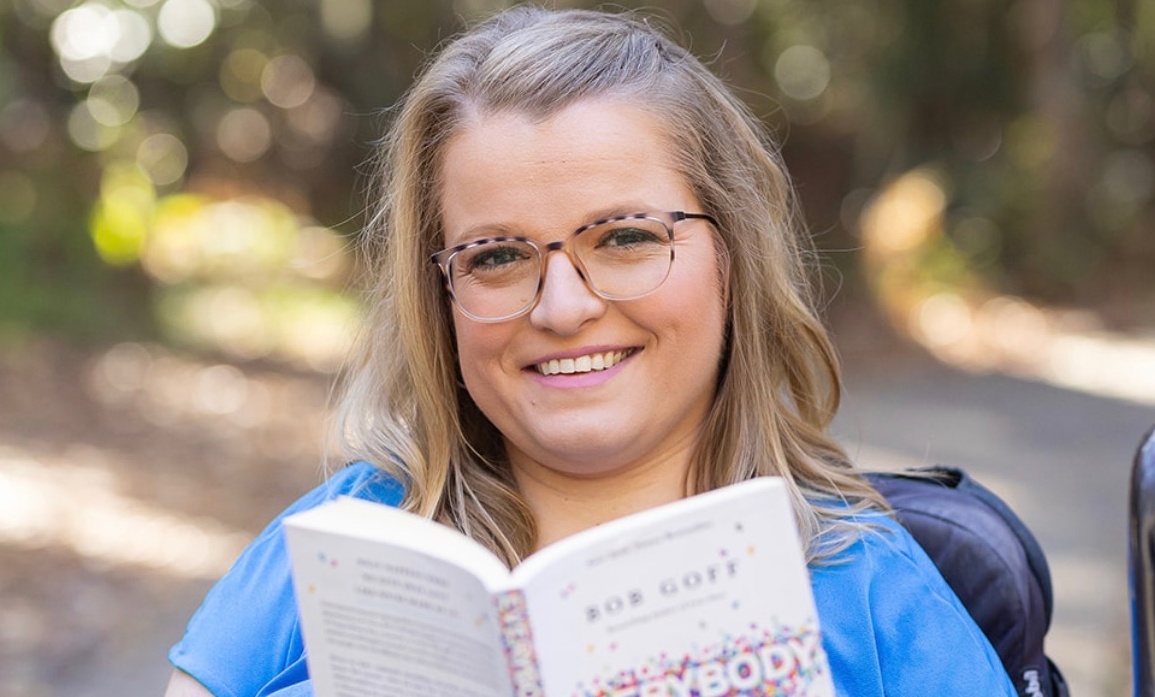
Written by Emilee Smith, Hopelynd intern from Grand Valley State University.
Arthrogryposis multiplex congenita (AMC) is an umbrella term used to describe a group of conditions characterized by multiple joint contractures (stiff or fixed joints) present at birth. A contracture is a condition in which muscles, tendons, or other soft tissue around a joint become shortened or tightened, limiting the joint’s range of motion. Rather than being a disease, AMC describes more than 400 different conditions that share this common feature. (National Organization for Rare Disorders). In this post, we’ll explore what Arthrogryposis is, its potential causes and genetic factors, how it is diagnosed and treated, and share the story of a family living with AMC.
Cover photo of Sara: Tracy L Photography.
Arthrogryposis
The most common form of arthrogryposis is amyoplasia, which affects the shoulders, elbows, wrists, hands, hips, knees, and feet. Another common type is distal arthrogryposis, which primarily affects the hands and feet. (National Organization for Rare Disorders). Although joint contractures are present at birth, arthrogryposis itself is not progressive, so it does not spread to previously unaffected joints over time. However, ongoing therapy and medical care are often needed as a child grows. (Nationwide Children’s Hospital, Cleveland Clinic).
Arthrogryposis occurs in 1 in every 3,000 births, making it a rare condition. The severity varies from person to person; while some individuals have contractures in only a few joints, others may have multiple joints throughout the body affected. Most individuals with AMC, with support and early intervention, can lead active, independent, and fulfilling lives. (National Organization for Rare Disorders).
Symptoms
The most defining symptom of AMC is the presence of multiple joint contractures (stiff or fixed joints) in two or more areas of the body at birth. These contractures limit the normal range of motion, making it difficult to bend or straighten affected joints. (National Organization for Rare Disorders; Cleveland Clinic).
Many people with AMC also have underdeveloped muscles, causing arms and legs to appear thin or tube-shaped. The joints most commonly affected include the shoulders, elbows, wrists, fingers, hips, knees, ankles, and feet, and severe clubfoot is common in some forms of AMC. (National Organization for Rare Disorders; Cleveland Clinic).
Symptoms vary depending on the underlying cause and subtype. Some individuals may also have hip dislocations, low muscle tone, cleft palate, or abnormalities of the brain and spinal cord. Because AMC encompasses more than 400 conditions, the severity and combination of symptoms can vary greatly from person to person. (National Organization for Rare Disorders).
Genetics
Arthrogryposis multiplex congenita (AMC) can have a genetic cause, but most cases are not inherited. Researchers have identified more than 400 genes associated with AMC, and it has been linked to over 35 genetic disorders. Overall, a genetic cause is found in about 30% of cases. (Cleveland Clinic; Nationwide Children’s Hospital).
The most common type of AMC, amyoplasia, usually occurs sporadically, meaning it develops randomly and is not passed down through families. In contrast, distal arthrogryposis is often inherited in an autosomal dominant pattern, meaning a parent with the condition has a 50% chance of passing the altered gene to each child. Less commonly, AMC may also be inherited in an autosomal recessive, X-linked, or mitochondrial pattern. (National Organization for Rare Disorders).
In some individuals, AMC develops as part of a broader genetic syndrome or chromosomal condition. In contrast, others result from a combination of genetic and environmental factors that affect fetal movements and muscle or nerve development during pregnancy. (National Organization for Rare Disorders; Cleveland Clinic).
Treatment
There is currently no cure for AMC, but early treatment can significantly improve mobility, independence, and quality of life. Because symptoms vary widely, treatment is individualized and often involves a multidisciplinary team that may include physical and occupational therapists, orthopedic surgeons, pediatricians, neurologists, rehabilitation specialists, and genetic counselors. (National Organization for Rare Disorders; Nationwide Children’s Hospital).
Physical and occupational therapy are the foundation of treatment and typically include stretching, joint manipulation, strengthening exercises, casting or splinting, and mobility training to improve range of motion and prevent muscle wasting. In some cases, orthopedic surgery may be recommended to correct joint deformities or increase mobility in the hips, knees, ankles, elbows, or wrists. Genetic counseling may also be helpful for families when a genetic cause of AMC is identified. (National Organization for Rare Disorders; Cleveland Clinic).
Community Highlight: Sara Gaver
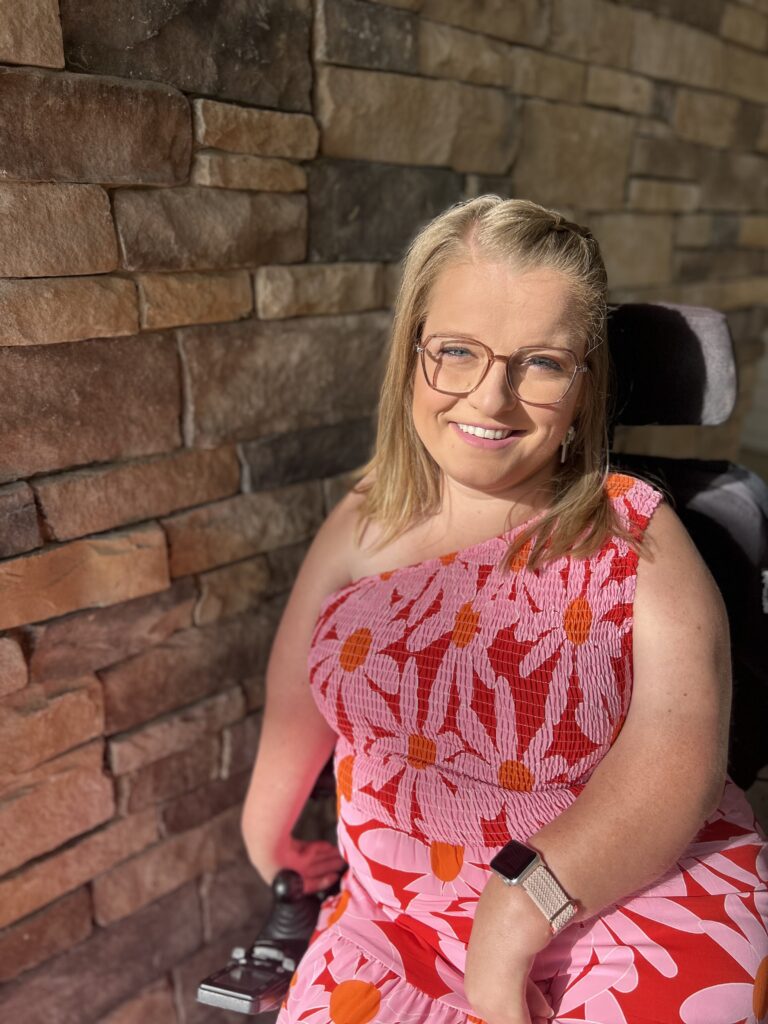
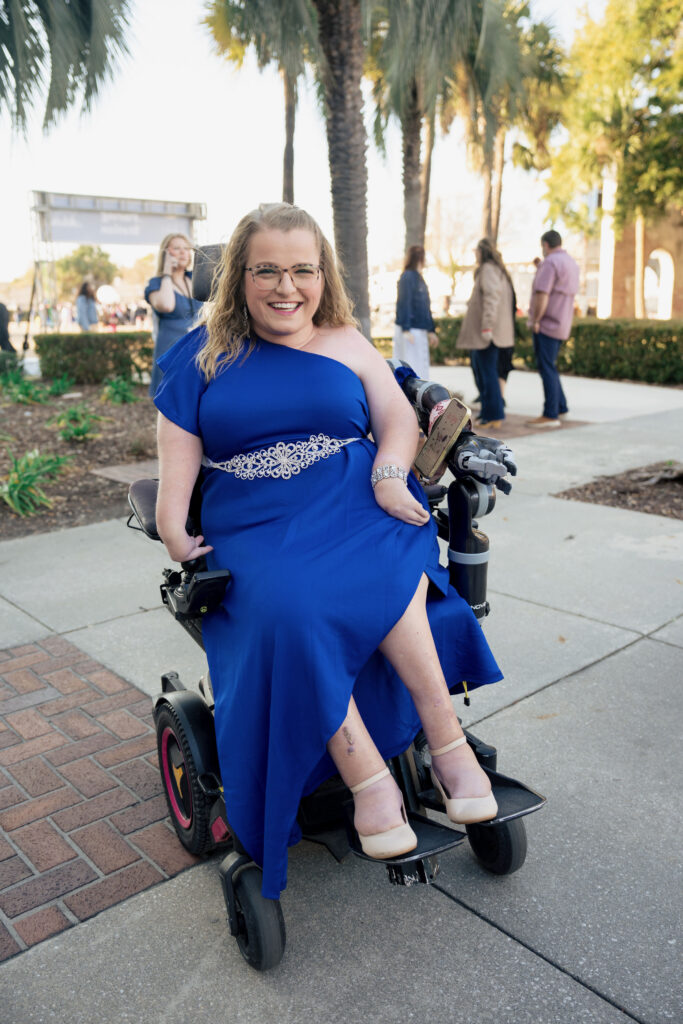
Sara was born with arthrogryposis, but her diagnosis did not come immediately. She spent the first few months of her life without a clear diagnosis until doctors were able to connect her with additional specialists at another hospital. Once they had more information, Sara was given her diagnosis and began learning how to navigate life with a disability.
One misconception she frequently encounters is that because she uses a wheelchair and has limited use of her arms and legs, she cannot do things for herself. In reality, she has found ways to adapt and accomplish many things through creativity and assistive technology. Rather than seeing her disability as a reason to miss out on opportunities, Sara has learned how to find different ways to participate and pursue the things that are important to her.
Her days are filled with work, art, and community involvement. She receives two hours of caregiving support in the morning before working from home full-time as a sales analyst. Outside of work, she is also an artist who paints with her mouth. She volunteers at a local aquarium, where she teaches art classes and encourages children to see the positive impact that art can have on their lives. Sara is also involved with her local Center for Independent Living, where she runs their podcast. Between her work, volunteering, art, church, and other community activities, she looks for opportunities to stay involved and connected with the people around her.
Sara’s Art
Sara paints by holding the brush in her mouth, and she shares her work on her Facebook page.
Sara’s Book
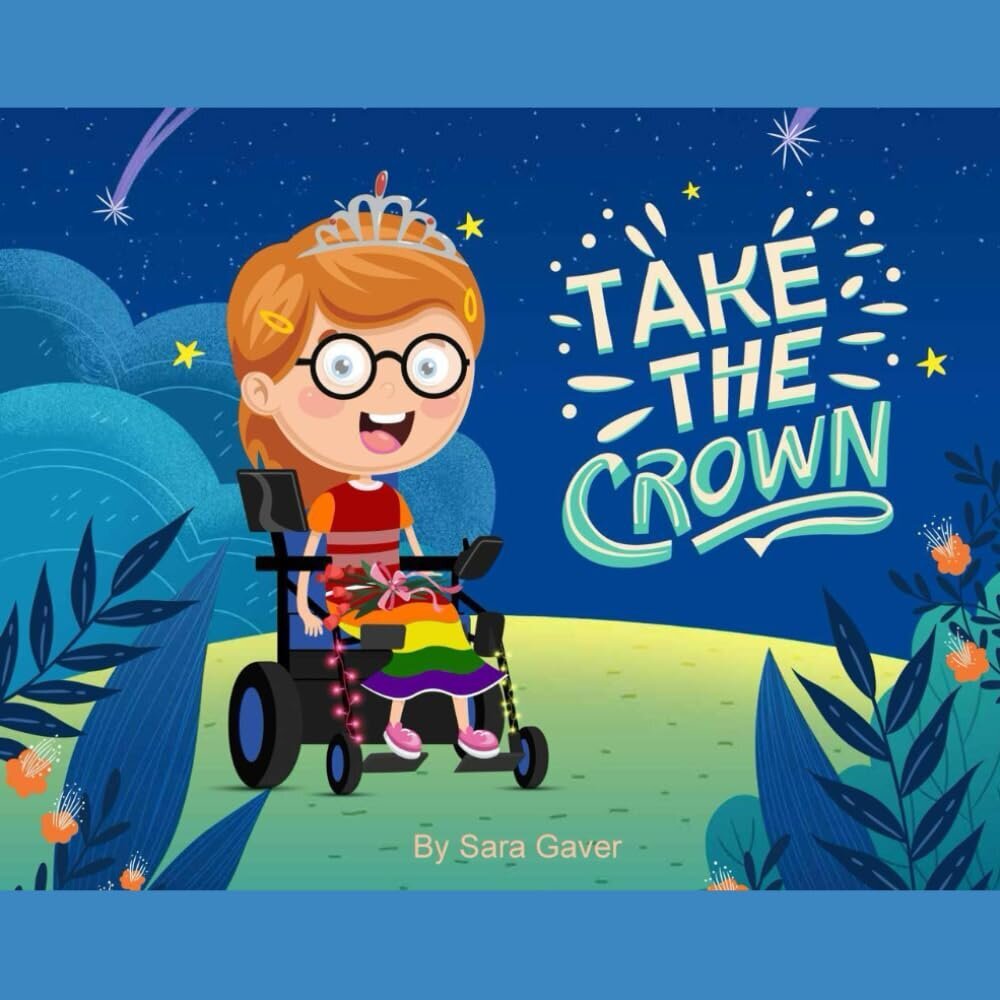
Sara is also an author. Her book, Take the Crown, is an illustrated book whose cover shows a smiling child in a power wheelchair, wearing a crown.
You can find it on Amazon, and with other books by members of our community on our Resources page.
One of the things that makes Sara feel the most supported or included is being remembered when people are making plans. Being invited to an event shows her that they weren’t worried about the barriers there would be or what obstacles she may face, but that they really want her involved. That feeling of being wanted and included as a friend or community member can make a significant difference.
Sara has found much of her community through her church, where she feels cared for and accepted as she is. She has also found connection through local artists. Being able to learn from other artists, discover what inspires them, and be recognized as an artist herself has helped her feel valued within that community. Sara also enjoys meeting people and finding connections wherever she goes, bringing positivity and a smile to the people she meets.
Despite the support she has found, there are still resources she wishes were more readily available. One area she would like to see more resources for is accommodations and adaptations within homes and apartments. Having access to resources that make everyday living spaces easier to navigate could provide greater independence for people with disabilities. Transportation is another area Sara believes could be improved. Although she drives her own car, she has seen how unreliable transportation services can create barriers for people with disabilities. She hopes to see more dependable options that allow more people to get where they need to go in the future.
She hopes more people with disabilities will feel comfortable getting involved in their communities. Attending an event can be intimidating when you do not know what barriers you might encounter, but she believes that being present is an important part of creating greater awareness. By showing up and getting involved, they can help others understand that they belong in those spaces too.
Citations and Resources:
- National Organization for Rare Disorders (NORD): Arthrogryposis Multiplex Congenita
- Nationwide Children’s Hospital: Arthrogryposis (AMC)
- Cleveland Clinic: Arthrogryposis (AMC): Symptoms & Treatments
