


What is Autism
Autism is one of the most commonly discussed and often misunderstood developmental disorders. Many people picture autism as one type of person or set of behaviors, but in reality, autism exists on a broad spectrum and affects millions of individuals in very different ways. These differences are partly due to the disorder’s complex genetics. Throughout this blog, we’ll discuss what Autism Spectrum Disorder (ASD) is, the genetics behind it, and the experiences of a local family navigating life with autism.
According to the National Institute of Child Health and Human Development (NICHD), Autism Spectrum Disorder (ASD) is a neurological and developmental disorder that affects how a person communicates, interacts with others, learns, and processes the world around them. Autism typically appears in early childhood, with many children showing signs by ages 2-3, according to the Mayo Clinic. However, the timing of diagnosis can vary significantly depending on the severity of symptoms presented by the individual. This is why autism is a spectrum disorder, meaning the symptoms and severity can vary greatly from person to person.
Background
Common characteristics of autism can include:
- Difficulty with communication and social interactions
- Highly focused interests
- Sensory sensitivity
- Difficulty in speech, learning, or memory
- Repetitive behaviors or routines
Misconceptions
Studies from the Centers for Disease Control and Prevention show that boys are diagnosed with autism more frequently than girls. However, researchers believe autism in girls is often overlooked because symptoms may present differently or be better masked socially. Another common misconception about autism is that it can be caused by poor parenting or vaccines, claims that have been scientifically disproven according to New Journal of Care, Outreach, and Support of Autism Communities (NJOSAC). Research shows autism is linked largely to genetic and neurological factors. While certain genetic and environmental influences may increase the likelihood of autism, there is currently no known way to prevent ASD, and it is not the result of anything parents did or did not do
Genetics
Autism is a complex genetic disorder because it isn’t caused by one singular gene. Instead, autism is influenced by many different genes working together, each contributing a small effect to a person’s overall likelihood of developing ASD. This pattern is known as polygenic inheritance, according to Biology Insights.
Because many different genes may contribute to autism, symptoms can vary greatly from person to person. This genetic complexity is one of the reasons autism exists on such a broad spectrum and why individuals with ASD can experience different strengths, challenges, and behaviors.
In some cases, autism can result from spontaneous genetic changes called de novo mutations. These mutations are not inherited from parents but occur randomly during early embryonic development. De novo mutations are more commonly seen in individuals with autism who have no family history of the condition.
To better understand the experiences of living with ASD day-to-day, we spoke with a local family in our community about their experience.

The Potter family
For the Potter family, the journey toward an autism diagnosis began when their son, Kashen, was just 18 months old. A routine developmental screening raised concerns and led to a series of referrals, evaluations, and months of waiting for answers. As first-time parents, they knew their son was developing differently, but they weren’t sure what that meant. When autism was first mentioned as a possibility, denial was almost immediate. They spent countless hours researching, and the matching signs felt overwhelming. Receiving an Autism Spectrum Disorder diagnosis brought both clarity and uncertainty. While the diagnosis helped explain many of Kashen’s behaviors, it also opened the door to years of therapies, appointments, and learning how to navigate a world that often wasn’t designed with children like him in mind. Much of his early childhood was spent balancing school, speech therapy, and Applied Behavioral Analysis (ABA) therapy. At one point, he attended school all day and then went straight to therapy until bedtime. His parents often wondered if they were taking away from the carefree childhood they had imagined for him.
Because Kashen was nonverbal until around age four, communication often required patience and persistence. His family relied heavily on visual support, communication boards, and constant encouragement to help him express his needs. “One of the hardest parts was not being able to ask about his day or know whether something good or upsetting happened,” says Kashen’s mom. Even now, recalling events can sometimes be difficult for him, leading to both challenges and memorable family stories.
Like many families affected by autism, they have faced challenges that others may not see. They worry about judgment from strangers, the possibility of bullying, and whether their son will always find people who understand and accept him. They also reflect on the sacrifices made along the way, wondering if the countless hours spent in therapy took away from the carefree childhood they hoped he would have. Despite those challenges, their story is ultimately one of growth, resilience, and joy. Today, Kashen participates in school sports and community activities. He has become involved in Unified Basketball, Special Olympics, Flag Football, soccer, and Challenger League baseball. Milestones that once seemed far away.
Along the way, the family has found support through friends, educators, local organizations, and other parents who understand the journey firsthand. Community resources have played an important role in helping them feel connected and supported. Organizations such as Hopelynd have provided opportunities to attend inclusive events, connect with other families, and build relationships with people who share similar experiences.
Above all, they hope people understand that autism does not define a person. Every child is unique, with their own strengths, personality, and way of experiencing the world. Kashen is much more than his diagnosis; he is sweet, curious, outgoing, and deeply loved. The greatest gift others can offer is simple acceptance. Looking back on their journey, the family says they have learned to celebrate progress over perfection and find joy in victories both big and small. Through every challenge, they have discovered that love, patience, and showing up for one another each day matter most.
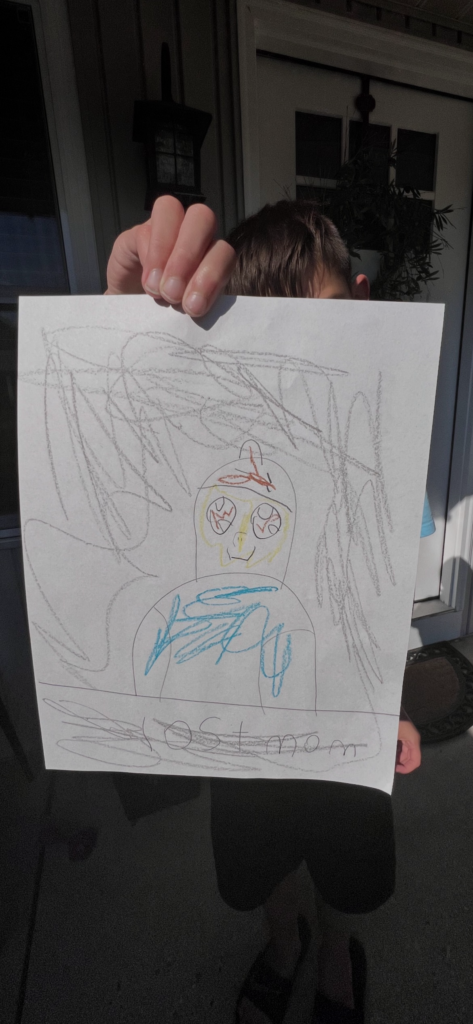
“When Kashen forgot that his mom had walked to the bus stop to pick up his sister, he began creating and hanging ‘Lost Mom’ posters around the yard to help find her. While his family laughs about the story now, it also highlights some of the communication and memory challenges they navigate every day.”

Citations and Resources:
- Mayo Clinic- “Autism Spectrum Disorder”
- National Institute of Child Health and Human Development- “About Autism”
- Centers for Disease Control and Prevention – “Data and Statistics on Autism Spectrum Disorder”
- New Jersey Center for Outreach and Services for the Autism Community – “Common Myths and Misconceptions About Autism”
- Biology Insights – “Is Autism Hereditary? The Genetic Factors Explained”
